Maintaining a healthy body weight is one of the most important factors for overall well-being, yet many people struggle to understand what their ideal weight should be.
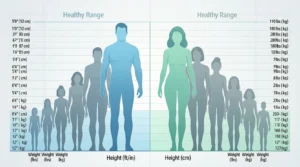
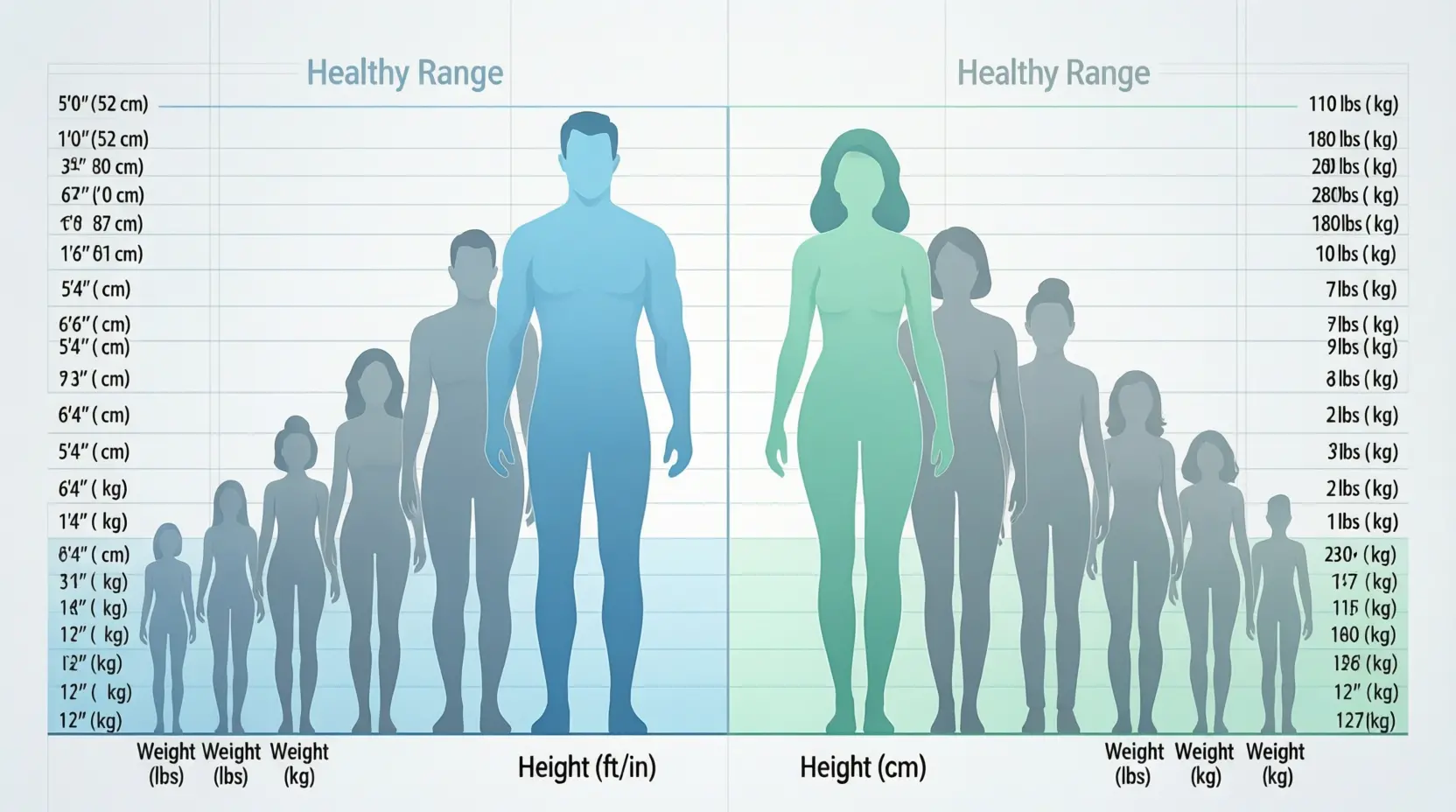
A height to weight chart offers a simple and practical way to estimate a healthy weight range based on your height. By comparing your height with an appropriate weight range, you can quickly determine whether you are underweight, within a healthy range, overweight, or obese.
Height-to-weight charts are widely used by healthcare professionals, fitness experts, and individuals who want a clear starting point for managing their health. While they are not a medical diagnosis, these charts provide valuable guidance for setting realistic fitness and weight goals.
In this comprehensive guide, you will learn how height to weight charts work,
how accurate they are, and how to use them correctly for men, women, and children.
Whether your goal is weight loss, weight gain, or maintaining a healthy lifestyle, this guide will help you make informed decisions with confidence.
What Is a Height to Weight Chart?
A height to weight chart is a reference tool that shows a healthy or ideal weight range based on a person’s height. It is designed to give a quick overview of whether an individual’s body weight falls within a generally accepted healthy range. These charts are commonly used in healthcare settings, fitness programs, and personal wellness planning because they are easy to understand and apply.
Unlike complex medical tests, a height-to-weight chart relies on basic measurements—height and body weight—to provide guidance. Most charts present weight ranges rather than a single “perfect” number, acknowledging that healthy bodies come in different shapes and sizes. This approach helps users set realistic expectations instead of aiming for an exact weight that may not suit their body type.
Height to weight charts are often created using population data and health research, taking into account average body composition. Some versions are tailored specifically for men, women, or children, while others provide general guidelines for adults. These charts are especially useful for people who want a quick assessment without using calculators or formulas.
However, it’s important to understand that a height to weight chart is a guideline, not a diagnosis. Factors such as muscle mass, bone density, age, and activity level can affect whether a weight is truly healthy for an individual. When used correctly, height-to-weight charts serve as a helpful starting point for evaluating health and setting fitness goals.
How Height to Weight Charts Work
Height to weight charts work by comparing an individual’s height with a recommended weight range that is considered healthy for most people. Instead of focusing on a single ideal number, these charts provide minimum and maximum weight limits, allowing flexibility for differences in body composition. This makes them more practical for everyday use than strict formulas.
The chart typically lists heights in centimeters or feet and inches on one side, with corresponding weight ranges in kilograms or pounds on the other. By finding your height on the chart and reading across, you can quickly see where your current weight fits. If your weight falls below the range, it may indicate being underweight. If it exceeds the range, it could suggest overweight or obesity, depending on how far above the limit it is.
One key reason height to weight charts use ranges is that people store weight differently. Two individuals of the same height may have very different body types—one may have more muscle mass, while the other carries more body fat. The chart accounts for this variation by offering a span rather than a fixed target.
It’s also important to understand that these charts are based on averages. They are designed to work well for the general population but may not perfectly reflect everyone’s health status. Athletes, for example, often weigh more due to higher muscle mass yet remain very healthy. When used as a general screening tool, height to weight charts help users recognize potential weight-related health concerns and decide whether further evaluation or lifestyle changes are needed.
Height to Weight Chart for Adults
Height to weight charts for adults are designed to provide a general estimate of a healthy weight range based on adult body proportions. These charts are most accurate for individuals aged 18 and above, as height typically remains stable after adulthood while weight can fluctuate due to lifestyle, diet, and activity levels. For this reason, adult charts focus on maintaining balance rather than growth.
For individuals adult height to weight charts often differ slightly because of natural differences in body composition. Men generally have higher muscle mass and denser bones, which can place them toward the higher end of a healthy weight range. Women, on the other hand, tend to have a higher body fat percentage, which is normal and necessary for hormonal health. As a result, gender-specific charts help provide more realistic and useful guidance.
Adult height to weight charts are commonly used as a starting point for health assessments, weight management plans, and fitness goals. They allow individuals to quickly identify whether they are underweight, within a healthy range, or above the recommended limit. This information can be especially helpful when setting weight loss or weight gain goals, as it encourages realistic expectations.
However, adult charts should not be followed blindly. Factors such as age-related muscle loss, pregnancy, medical conditions, and physical activity levels can influence what a healthy weight looks like for a specific person. While height to weight charts offer valuable insight, they are most effective when combined with other measurements such as body mass index (BMI), waist circumference, and professional medical advice.
Height to Weight Chart for individuals
Height to weight charts are often separated for individuals because biological differences significantly influence body composition. Men typically have greater muscle mass, broader shoulders, and denser bones, which means a healthy weight for men is often higher than that of women of the same height. Women naturally carry a higher percentage of body fat, which plays an important role in hormonal balance and overall health.
For men, a height to weight chart usually allows a wider upper weight range to account for muscle development and bone density. Physically active men or those involved in strength training may fall at the higher end of the range and still be considered healthy. Using a male-specific chart helps prevent misclassifying muscular individuals as overweight.
For women, height to weight charts are adjusted to reflect differences in fat distribution and metabolic needs. Healthy weight ranges for women are generally lower than men at the same height, but this does not indicate lesser health or strength. Instead, it reflects natural physiological differences. Factors such as pregnancy, menopause, and hormonal changes can also influence weight, making flexible ranges essential.
It is important for both individuals to understand that these charts are not meant to define appearance or self-worth. They are tools for assessing general health risk. Someone slightly outside the recommended range may still be healthy, especially if they maintain an active lifestyle and balanced diet. When used correctly, gender-specific height to weight charts provide more personalized guidance and help individuals set healthier, more realistic goals for long-term wellness.
Height to Weight Chart for Children and Teenagers
Height to weight charts for children and teenagers are different from adult charts because young bodies are constantly growing and developing. During childhood and adolescence, height and weight change rapidly, and healthy growth patterns vary widely from one individual to another. For this reason, children’s height to weight charts are usually based on age- and gender-specific percentiles rather than fixed weight ranges.
Pediatric height to weight charts compare a child’s measurements with those of other children of the same age and gender. These percentiles help determine whether a child is growing at a healthy rate. For example, a child in the 50th percentile is close to the average, while those in lower or higher percentiles may still be healthy depending on their growth pattern over time.
Teenagers experience growth spurts, hormonal changes, and shifts in body composition, making short-term weight changes common. A teenager may gain weight before growing taller, or grow rapidly in height before gaining weight. Because of this, adult height to weight charts are not appropriate for children or teens and can lead to unnecessary concern.
Parents should focus on long-term growth trends rather than individual numbers. Sudden or extreme changes in a child’s height or weight may warrant a visit to a pediatrician, but small variations are normal. Height to weight charts for children are best used as a monitoring tool, helping healthcare providers and parents ensure healthy development rather than aiming for a specific “ideal” weight.
Metric vs Imperial Height to Weight Charts
Height to weight charts can be presented using either the metric system or the imperial system, depending on regional preferences and medical standards. While both systems serve the same purpose, understanding the difference helps ensure accurate interpretation and prevents measurement errors.
Metric height to weight charts use centimeters (cm) for height and kilograms (kg) for weight. This system is widely used in most countries and is commonly preferred in medical and scientific settings because of its simplicity and consistency. Metric charts are easier to convert and calculate, especially when used alongside health measurements such as BMI, which is also based on metric units.
Imperial charts, on the other hand, measure height in feet and inches and weight in pounds (lbs). These charts are more commonly used in the United States and a few other regions. Many people find imperial units more familiar for everyday use, especially when tracking personal weight changes over time.
Regardless of the system used, the accuracy of a height to weight chart depends on correct measurements. Mixing metric and imperial units without proper conversion can lead to misleading results. For example, confusing pounds with kilograms can significantly distort weight assessment.
To avoid errors, users should stick to one system throughout their evaluation or use reliable conversion formulas when switching between systems. Both metric and imperial height to weight charts provide equally useful guidance as long as measurements are accurate and consistently applied. The choice ultimately depends on personal preference and regional standards.
Height to Weight Chart vs BMI
Height to weight charts and Body Mass Index (BMI) are two of the most commonly used methods for assessing whether a person’s weight falls within a healthy range. While both rely on height and weight, they differ in how they interpret these measurements and the level of detail they provide.
A height to weight chart offers a visual reference that matches a person’s height with a recommended weight range. It is simple, quick, and easy to understand, making it popular for general use. Many people prefer charts because they do not require calculations and can be interpreted at a glance. However, charts are based on broad averages and may not account for individual differences such as muscle mass or body frame size.
BMI, on the other hand, uses a mathematical formula that divides weight by height squared. The result places individuals into categories such as underweight, normal weight, overweight, or obese. BMI is widely used in medical research and public health because it provides standardized categories that can be compared across populations.
Despite its popularity, BMI has limitations. Muscular individuals may be classified as overweight, while people with low muscle mass but high body fat may appear healthy. Height to weight charts share similar limitations, but they are often considered more user-friendly.
Neither method is perfect on its own. Height to weight charts are ideal for quick screening, while BMI is useful for population-level analysis. For the most accurate assessment, these tools should be combined with other measurements such as waist circumference, body fat percentage, and professional medical advice.
Factors That Affect Ideal Weight
While height to weight charts provide helpful general guidelines, they do not account for all the variables that influence a person’s ideal weight. Several physical, biological, and lifestyle factors can cause healthy weights to vary significantly between individuals of the same height.
Age plays an important role, as metabolism tends to slow over time. Older adults may naturally weigh more due to changes in muscle mass and fat distribution, even if their height remains the same. Gender is another key factor, as individuals differ in muscle mass, bone density, and fat storage patterns.
Body frame size also affects ideal weight. People with larger bone structures may fall at the higher end of a healthy weight range, while those with smaller frames may be healthy at the lower end. Muscle mass is especially important, since muscle weighs more than fat. Athletes and physically active individuals often weigh more but still maintain excellent health.
Genetics influence how bodies store fat, build muscle, and regulate appetite. Two people with identical height and lifestyle habits may still have different healthy weights due to genetic differences. Lifestyle factors such as diet, physical activity, sleep quality, and stress levels further impact body weight.
Medical conditions, medications, and hormonal changes can also affect weight. Because of these variables, a height to weight chart should be viewed as a starting point rather than a definitive answer. Understanding these influencing factors allows individuals to interpret chart results more accurately and make healthier, personalized decisions.
Is a Height to Weight Chart Accurate?
The accuracy of a height to weight chart depends largely on how it is used and who is using it. For the general population, these charts provide a reliable first-level screening tool to identify potential weight-related health risks. They are especially useful for people who want a quick and simple way to assess whether their weight falls within a broadly healthy range.
Height to weight charts are based on population averages, which means they work best for individuals with typical body compositions. For many adults, staying within the recommended range is associated with lower risks of conditions such as heart disease, diabetes, and high blood pressure. In this sense, the charts are effective at highlighting potential concerns early.
However, their accuracy decreases for certain groups. Athletes, bodybuilders, and physically active individuals often have higher muscle mass, which increases body weight without increasing health risk. In such cases, a chart may incorrectly classify a healthy person as overweight. Similarly, older adults with reduced muscle mass may fall within a healthy range on the chart but still face health challenges.
Height to weight charts also do not consider fat distribution, which is an important factor in health risk. Abdominal fat, for example, is linked to higher health risks than fat stored elsewhere. Because of these limitations, height to weight charts should not be used as a diagnostic tool.
Overall, while height to weight charts are not perfectly accurate for everyone, they remain a valuable general guideline when combined with other health measurements and professional medical advice.
How to Use a Height to Weight Chart Correctly
Using a height to weight chart correctly is essential to getting meaningful and accurate results. The first step is to ensure that your measurements are precise. Measure your height without shoes, standing straight against a wall, and weigh yourself on a reliable scale under similar conditions each time, preferably in the morning.
Once you have accurate measurements, select a chart that matches your category, such as adult, child, male, or female. Using the wrong chart can lead to misleading conclusions. Find your height on the chart and follow it across to see the recommended weight range. Instead of focusing on a single number, pay attention to the entire range and where your current weight falls within it.
If your weight is slightly above or below the range, avoid panic. Small deviations do not automatically indicate poor health. Consider other factors such as muscle mass, activity level, and overall lifestyle. The chart should be viewed as a guide rather than a strict rule.
It’s also important to avoid frequent overchecking. Daily weight fluctuations are normal and can be influenced by hydration, food intake, and hormonal changes. Checking your weight periodically, such as once a week or once a month, provides a more realistic picture.
Finally, use the chart as a starting point for healthier habits. If your weight is outside the recommended range, focus on sustainable changes like improving diet quality, increasing physical activity, and getting enough sleep. For personalized advice, consulting a healthcare professional ensures the safest and most effective approach.
Healthy Weight Ranges Explained
Healthy weight ranges on a height to weight chart are designed to represent body weights associated with lower health risks for most people. These ranges are not arbitrary; they are based on large-scale health data that links body weight to conditions such as heart disease, diabetes, and joint problems. Understanding what these ranges mean can help individuals interpret charts more confidently.
Being underweight may indicate inadequate nutrition, muscle loss, or underlying medical issues. People below the healthy range may experience fatigue, weakened immunity, and hormonal imbalances. In contrast, maintaining a weight within the healthy range is generally associated with better energy levels, improved metabolic health, and reduced risk of chronic disease.
Weights above the healthy range are often classified as overweight or obese, depending on how far they exceed the recommended limit. Excess body weight can place additional strain on the heart, joints, and internal organs. However, it is important to recognize that weight alone does not determine health. Some individuals may fall slightly above the range but maintain good cardiovascular fitness and metabolic markers.
Healthy weight ranges are best viewed as zones, not strict boundaries. Movement within a range is normal throughout life due to aging, lifestyle changes, and hormonal shifts. Instead of aiming to stay at a specific number, individuals should focus on maintaining overall health through balanced nutrition, regular physical activity, and healthy habits. Using weight ranges as guidance encourages flexibility and supports long-term well-being rather than short-term perfection.
How to Reach and Maintain a Healthy Weight
Reaching and maintaining a healthy weight involves more than simply matching a number on a height to weight chart. While the chart helps identify a target range, long-term success depends on sustainable lifestyle habits that support overall health.
For individuals aiming to lose weight, focusing on gradual changes is key. A balanced diet that includes whole foods such as fruits, vegetables, lean proteins, and whole grains helps reduce excess calorie intake while providing essential nutrients. Regular physical activity, including both cardiovascular exercise and strength training, supports fat loss and preserves muscle mass. Crash diets and extreme calorie restriction often lead to short-term results followed by weight regain.
Those looking to gain weight in a healthy way should prioritize nutrient-dense foods rather than empty calories. Increasing protein intake, adding healthy fats, and engaging in resistance training can help build muscle mass. Healthy weight gain is especially important for individuals who are underweight or recovering from illness.
Maintaining a healthy weight requires consistency. Adequate sleep, stress management, and hydration play a significant role in regulating appetite and metabolism. Monitoring progress occasionally—without obsessing over daily fluctuations—helps maintain balance.
It’s also important to recognize that health is not defined by weight alone. Energy levels, mental well-being, strength, and mobility are equally important indicators. A height to weight chart provides direction, but true success comes from adopting habits that support a healthy body for life.
When to Consult a Doctor or Healthcare Professional
While a height to weight chart is a useful general guide, there are situations where professional medical advice is essential. If your weight is significantly below or above the recommended range, a doctor or healthcare professional can help determine whether there are underlying causes that need attention. Sudden or unexplained weight changes are another important reason to seek medical guidance.
Individuals with chronic health conditions such as diabetes, heart disease, thyroid disorders, or hormonal imbalances should not rely solely on height to weight charts. These conditions can affect metabolism and body composition, making personalized assessment necessary. Similarly, people taking long-term medications that influence appetite or weight should consult a healthcare provider before making major lifestyle changes.
Because growth patterns vary widely, a healthcare provider can assess whether a child’s height and weight follow a healthy trajectory over time. For pregnant women, weight needs change significantly, and standard height to weight charts are not appropriate.
Healthcare professionals may use additional tools such as blood tests, body composition analysis, waist measurements, and dietary assessments to provide a more complete picture of health. A registered dietitian or nutritionist can also create a personalized eating plan based on individual goals and needs.
Ultimately, height to weight charts are most effective when combined with expert guidance. Seeking professional advice ensures that weight management decisions are safe, realistic, and tailored to your unique health circumstances.
Common Myths About Height to Weight Charts
There are many misconceptions surrounding height to weight charts that can lead to confusion or unrealistic expectations. One of the most common myths is that there is one perfect weight for every height. In reality, healthy weight exists within a range, and individual factors such as body type, muscle mass, and lifestyle play a major role in determining what is truly healthy.
Another widespread myth is that height to weight charts define attractiveness or physical appearance. Two people with the same height and weight can look very different due to differences in fat distribution, muscle tone, and bone structure.
While excess weight can increase health risks, many individuals slightly above the range may still be metabolically healthy, especially if they are physically active and maintain good nutrition. Conversely, being within the “healthy” range does not guarantee overall wellness if other health factors are neglected.
A common misunderstanding is that height to weight charts are outdated or useless. While they do have limitations, they remain valuable as a simple screening tool when used correctly. Problems arise only when charts are treated as diagnostic tools rather than guidelines.
Understanding these myths helps users approach height to weight charts with a balanced mindset, using them as supportive tools rather than rigid rules for judging health.
FAQs
Many people have common questions when using a height to weight chart, especially if they are trying to understand what the numbers really mean for their health. The chart provides guidance, not an exact target.
Another common question is whether height to weight charts are better than BMI. Neither method is perfect. Height to weight charts are easier to read and use, while BMI offers standardized categories used in medical research.
People often ask if athletes can rely on height to weight charts. In most cases, athletes should be cautious. Higher muscle mass can place them above the recommended range even when they are very healthy. For them, body fat percentage and performance measures are more informative.
Parents frequently wonder if charts change with age. Adult height to weight charts generally remain consistent, but children and teenagers require age-specific growth charts. Periodic monitoring is sufficient, as daily fluctuations are normal.
These FAQs highlight an important point: height to weight charts are helpful tools, but understanding how to interpret them correctly makes all the difference in using them effectively.
Final Thoughts on Height to Weight Charts
A height to weight chart is a practical and accessible tool for anyone seeking a clearer understanding of their body weight in relation to their height. It offers a simple starting point for evaluating whether your weight falls within a generally healthy range and can help guide decisions about lifestyle changes, fitness goals, or further health assessments.
However, it is important to remember that these charts are guidelines, not rules. Human bodies are complex, and no single chart can fully capture individual differences such as muscle mass, genetics, age, or medical conditions. Relying solely on a height to weight chart without considering other health indicators may lead to incomplete conclusions.
The most effective way to use a height to weight chart is as part of a broader health perspective. Combining it with other measurements—such as BMI, waist circumference, body fat percentage, and overall well-being—provides a more accurate picture of health. Even more important are daily habits like balanced nutrition, regular physical activity, adequate sleep, and stress management.
Rather than focusing on achieving a specific number, aim for consistency and sustainability. Small, positive changes maintained over time have a far greater impact than extreme or short-term efforts. If uncertainty or health concerns arise, professional medical advice should always take priority.
In summary, height to weight charts are valuable educational tools that empower individuals to become more aware of their health. When used wisely and in context, they can support informed decisions and encourage a healthier, more balanced approach to weight and wellness.

I am Adrian Cole, a storyteller and positivity seeker, sharing daily inspiration, uplifting thoughts, and heartfelt moments to brighten your world.